Showing posts with label earth science. Show all posts

Tuesday, February 4, 2025

Of What Interest is Physics to a Psychologist?

 The Intersection of Science and Meaning

Jordan B Peterson, Oct 3, 2024 | Dr. Brian Greene | EP 486

Peterson talks to a physicist of string theory to ask him how physics might provide insight into ideas of psychology, philosophy and meaning. Here are some topics he gets into over the course of the hour and a half

1. The beginning of the universe – What does time mean at the beginning of time? (starting at 4:00)

2. (20:15) Green says something interesting about the second law of thermodynamics. Other physical laws, like the law of conservation of mass, are true. They can not be violated. The second law can be violated. It is just really unlikely.

Peterson asks a paradoxical question. The second law says the disordered states are more likely than ordered ones, but how do you define disordered? Isn’t one lottery ticket as unlikely as the next?


3. (37:42) How do you explain the double-slit experiment? If the stripe pattern happens because photons interfere with each other, how can you get the same pattern when you send one photon through at a time? This gets into some good questions about the limits of Einstein’s relativity. How does time work on a particle going so fast that time stops? What happens to a massless photon going so fast that mass becomes infinite? (Which leads into my favorite, how do we know that light goes the speed of light?)

4. (46:00)The quantum explanation, which says that you can’t ever know the location and speed of an object (The world you see is misleading about the fundamentals!), is not the only explanation that fits the data. De Broglie had a different interpretation that works.


5. (58:27) Greene talks about free will. He and Peterson lay out the usual positions. Particles behave in a deterministic way! Actions have predictable outcomes! Therefore everything is determined. So there is no free will. Peterson responds that at the quantum level there is no determinism, so Greene’s fixed chain of events is wrong. (Sounds like a first-year philosophy class. Then it takes a turn...)

Greene claims that the quantum world is not indeterminate. It is just too small to observe. All that probabilistic stuff of quantum mechanics is not real. It compensates for the fact that we can’t see the details of reactions. This seems to me relevant to a theological paradox. humans are free to act as we choose, to the point of following or not following God’s will. Yet God know the present, past and future, which depends on the choices that humans freely choose.

6. (1:07:00) Starts on string theory, which claims that it can combine general relativity (which works on big things) and quantum theory (which works on little things). String theory proponents say it is beautiful. Its detractors say it is not science. It has never made a testable prediction (I think they mean a novel testable prediction.) This looks to me like a very common choice between the scientific type (who makes a hypothesis, then waits for the results of the test) and the imaginative beauty-seeker.

Bonus idea: (50) tohu vabohu: Is it the state before the big bang (or, as its originator called it, the primeval atom)?

Saturday, February 10, 2018

Dinosaurs: Dead Again

You've heard that an asteroid killed the dinosaurs. 65 M years ago an asteroid hit Mexico's Yucatan peninsula, covered the earth in a layer of dust, including rare iridium, destroyed the plant life, then herbivores, then carnivores.

You may not have heard that it was the volcanoes. Starting 70 M years ago, near Mumbai in India, a collection of volcanoes called the Deccan Traps spewed sulphur and ash, including iridium, acidifying the oceans and blocking out the sun...etc. But could you have sworn that it mightn't be both?

Monday, July 24, 2017

I Could Outrun a T-Rex


Two studies say that the Tyranasaurus Rex could not have been the fiercely fast predator shown in Jurassic Park. One says he would have run out of energy before he got up to speed. The other says his bones were not strong enough to handle the weight at high speeds.

Saturday, April 22, 2017

The Original Earth Day


Whew! If you think the future is bad now, be glad it isn't 1970.
Thirteen predictions* from Earth Day, 1970.

(more Earth Day predictionsSimon and Ehrlich's famous bet)
*(Apr'17) Mark Perry says: eighteen.

Sunday, January 8, 2017

Dinosaurs Had Feathers

We have long imagined dinosaurs as mighty lizards: scales and all. Every once in a while it is good to be reminded just how little of what we know is fact and how much is speculation.

Our beliefs about dinosaurs are based on reconstructions of skeletons or parts of skeletons. No one has ever seen dinosaur skin. (Whoops, we have, or at least impressions of dinosaur skin.)

Only now, it seems we may have seen the tail of a dinosaur, down to the smallest detail of texture, possibly even some hints of coloring.

(Jun'17 - ...or maybe not.)

Sunday, January 31, 2016

Progress Towards Life on Mars


http://www.agenciasinc.es/en/News/Antarctic-fungi-survive-Martian-conditions-on-the-International-Space-Station

 A fungus from Antarctica has been proven to survive reasonably well in simulated Mars conditions.

This means that if we decide* to make Mars habitable, the technology to do so is at hand. We can send earth life that will survive and reproduce. If the photosynthetic species are also hardy enough, we can generate oxygen that would stabilize the atmosphere.

*That is to say, unless we have already sent it.
(June'18) Some promising cyanobacteria

Sunday, January 3, 2016

The Pacific Garbage Vortex

It seemed unbelievable, but I never found a clear spot.
Wakuya
In the week it took to cross the subtropical high, no matter what time of day I looked, plastic debris was floating everywhere: bottles, bottle caps, wrappers, fragments. ...he began referring to the area as the “eastern garbage patch.” But “patch” doesn’t begin to convey the reality. Ebbesmeyer has estimated that the area, nearly covered with floating plastic debris, is roughly the size of Texas.
 The tales of Garbage Island are lurid.
Like all good stories, it grew over time...“We even came upon a floating island bolstered by dozens of plastic buoys used in oyster aquaculture that had solid areas you could walk on.” Again no photo of the floating island, let alone of him walking on it.
 If you've wondered where those tales come from, read here. If you want to see the garbage patch, read here.

(Feb'17) If I wanted a sensational claim supported by the facts of this article, I could say that in the middle of the garbage vortex there may be 2-4000 pieces of garbage floating in every square meter of ocean.

Friday, September 4, 2015

Poison-injecting robot submarines

http://spectrum.ieee.org/automaton/robotics/industrial-robots/poison-robot-submarine

Queensland University of Technology has developed an autonomous, poison-injecting robot submarine to kill sea stars and save coral reefs.

The 21st century is upon us and autonomous assassination robots are here.

Thursday, August 27, 2015

Red Lightning


http://www.foxnews.com/science/2015/08/26/amazing-red-lightning-photographed-from-space/
This is what you see when you look at weather from the other side.

It is only seen above a thunderstorm and it only lasts for 1/50th of a second.

Sunday, January 11, 2015

"I Don't Know How You'll Survive When Our Genes Are Gone."


http://favim.com/image/33772/
The epic scale of the lyrics to the Big Bang Theory is no accident. The whole show is  a metaphor for the creation of the human race from Cro-Magnon and Neanderthal. You see, recent research on the Neanderthal genome suggests interbreeding.

The genes for red hair and pale skin didn't match well enough to show a correlation, but I found a correlation for genes linked to other traits. There's a gene cluster linked to advanced mathematics skills, information processing, logic, analytical intelligence, concentration skills, obsession–compulsion and Asperger's syndrome. That cluster correlates very strongly.
and the bad news:
The hybridization was successful in the Stone Age, but the environment has changed. I found that modern culture selects for socialization but against the Neanderthal traits for mathematics and intelligence, ... I don't know how you'll survive when our genes are gone."
Feb'15 Apparently Asians got two helpings of Neanderthal genes.

Friday, September 12, 2014

How To Identify Life

...from a few light-years away.

http://scienceblogs.com/startswithabang/2012/06/12/sometimes-size-is-everything/
 If we are looking for life on an exoplanet, What do we look for? Well, radio signals and TV broadcasts would be sure signs, but awfully unlikely. Seeing trees or animals moving on the surface is proof but far beyond the ability of any telescope we can build or imagine building*.


Instead, we hope to analyze light from the planet. From this light we can identify the chemicals in the atmosphere using spectral analysis. Oxygen (O2) would be a good sign. It reacts so well that most atmospheres would use it all to make CO2 or H2O unless there was life to release it. Computer models now show that it is actually possible for an atmosphere to have oxygen and even ozone without ever having life. So even though oxygen is still a good sign. It is not proof. For solid proof, you would need to find oxygen, ozone, carbon dioxide, and methane with no carbon monoxide.

(Oct'15) How Space Telescopes Will Find Earth 2.0: progress in seeing an exoplanet. *

Wednesday, June 18, 2014

Global Warming From a Sunnier Globe


http://www.vagabondjourney.com/airpocalypse-another-smog-storm-covers-china/
What if pollution makes the planet cooler? That's what made the most sense to me when I first thought about the issue. (I think it was grade 2 that I had noticed that clouds make it cooler and my teacher told me that pollution causes clouds.). You'd think someone would have looked into this earlier.

It turns out that pollution does block the sun. The planet's mid-century cooling (from the 50's to the 70's) is explained by the blockage of the sun. The late century rise in temperatures is explained by pollution reductions.


Plus, clarity from the comments:
"If i get this right, industrial pollution masked the natural warming from the Little Ice Age and the clean air initiatives caused the earth temperatures to rebound to normal levels." - Lawrence Todd

Friday, May 23, 2014

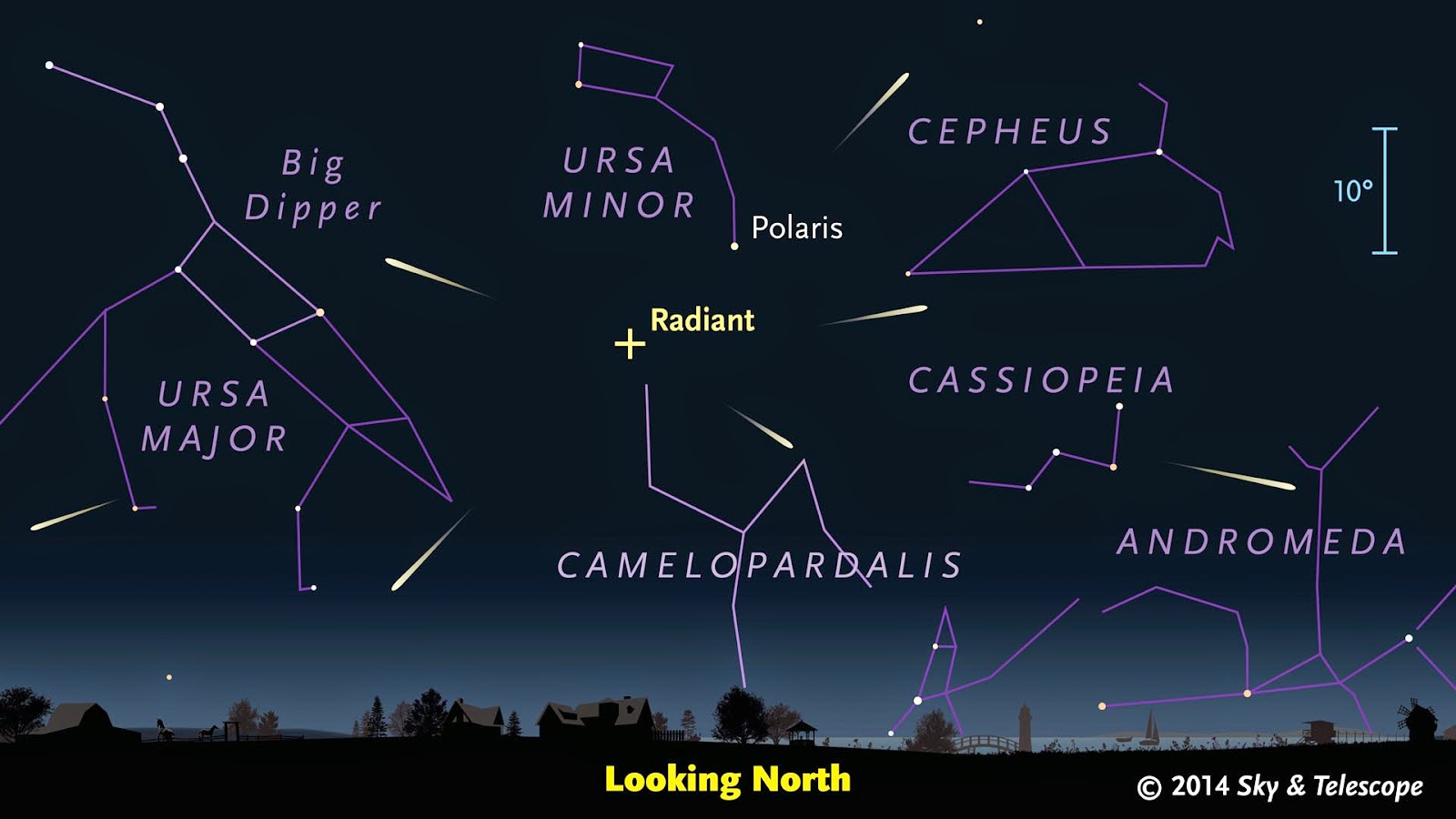
Meteor Shower Tonight

http://www.skyandtelescope.com/astronomy-news/observing-news/mays-surprise-meteor-shower/
That is, just after midnight, Friday, May 23 (aka early morning May 24) There will be a meteor shower called Camelopardalids. Look north. The meteors will appear to originate from just north of Polaris (the North Star).

Saturday, March 31, 2012

Looking for a Backup Earth

There has been ever more exciting news of late in looking for a a hospitable, earth-like planet. Thanks to a new orbiting telescope, the news is coming faster.

Most of the best looking planets are bigger and closer to their sun that earth. that is bad news because they will probably be too hot. If it is true that earth-like planets are normally too close to a sun, maybe we should be looking near a cooler red dwarf star to find a habitable planet.
Of course, the very idea does bring this to mind.

Plus, recent progress in how we might get there.

Wednesday, March 7, 2012

"Visualizing" Earthquakes

Have you ever wondered what an earthquake would sound like? Well, it wouldn't sound like anything because earthquake frequencies are in the 0.01 - 100 Hz range and we humans can't hear anything below 20 Hz.

But if you were to speed up the frequency, it would sound like this. (Note: in speeding up the frequency, they speed up the recording so what you hear in a minute, took an hour in real life.)
Update:
Look at all the other things we can listen for.

Wednesday, February 22, 2012

This Seed Grew 30,000 Years Ago...

And now a Pleistocene-era plant is once again growing on earth.
Our thanks go out to the hero of science who made this all possible: 

Tuesday, February 21, 2012

The Big One

We keep hearing about the big earthquake that may happen off the coast of Vancouver Island. A new paper says that Japan's latest quake makes our next quake more likely. Estimates put the likelihood between 10-35% that we will get one in the next 50 years. Oh did I mention it was a 9.0.

Friday, January 20, 2012

Thinking Like a Neanderthal

Neanderthal man had bigger brains than we homo sapiens do but they didn't think the same way. New Scientist has some ideas on how they would have thought.

Matt Ridley (the Rational Optimist) thinks the most important difference was our eagerness to trade. By trading, we benefit from our own innovations as well as the other guys' innovations and the innovations of everyone he knows. We might not have been smart enough to think of connecting a sharp rock to a straight stick, but if we meet anyone who was, we get sharp spears too.