Showing posts with label space. Show all posts

Thursday, March 25, 2021

First Flight

 This piece of cloth was part of the first powered flight on earth. 


...and on Mars.

Wednesday, April 19, 2017

Something From Nothing

One of the weirder ideas of Quantum mechanics is that empty space is not empty at all. No matter how empty you make a space, pairs of particles and and anti-particles will spontaneously come into being move around for a while, then touch each other and disappear.

Apparently physics equations predict that this could happen. We just haven't had any evidence for it...and no idea how we could possibly get evidence. A few decades ago someone suggested that if it happened close enough to a black hole one half of that particle pair could be sucked into the black hole while the other half moved away and became permanent new matter in the universe.


This year, a team from the European Southern Observatory's Very Large Telescope found visual evidence via a phenomenon called vacuum birefringence.

Sunday, February 5, 2017

Visiting Other Stars

The Breakthrough Starshot project has a realistic plan for humans to have a spacecraft inside another solar system in 20-30 years. Their idea is to make a swarm of tiny vehicles. They would be thrown into space somehow and propelled onward using a lightsail. Power for the lightsail doesn't need to be stored on the ship. These ones would get little power from the sun. The light would come from a massive laser on earth. The physicists figure they can  achieve speeds of 1/5 the speed of light or 60,000 km/s.

Each ship would have a mass of a gram or two. It would be a couple of cm in size but have a light sail that folds out to an area of 4m x 4m.

There are a lot of challenges: powering a computer for 30 years; recording, storing and transmitting photographs and video; cosmic rays; dissipating waste heat and impacts with space debris.

Ultimately, after all that journey, the craft would spend about two days travelling the distance of the earth's orbit.

If you want a ship that can take up orbit around the next star, that will take 100-150 years.

Thursday, August 27, 2015

Red Lightning


http://www.foxnews.com/science/2015/08/26/amazing-red-lightning-photographed-from-space/
This is what you see when you look at weather from the other side.

It is only seen above a thunderstorm and it only lasts for 1/50th of a second.

Wednesday, March 25, 2015

Smarter Every Day at the Motocross Track

There are some really good YouTube video sites. My favorite science channel must be Smarter Every Day. In 3-8 minutes, Destin finds some interesting thing to describe and investigate. His giddy enthusiasm, unfailing wonder and wholesome, humble southern demeanor make it awesome*.
(Having a $100,000 camera that shoots 250,000 frames per second doesn't hurt, either.)
Here is Destin investigating angular momentum at the motocross track.
*Destin-approved vocabulary

Having watched every video, here is my annotated list of Smarter Every Day episodes.

Sunday, January 4, 2015

Visiting Ceres in March

Not as dramatic as landing on a comet, but a first, just the same. In two months, NASA will orbit Ceres, the largest dwarf planet in the asteroid belt. The same craft has already orbited Vesta, the second largest. That will make it the first craft to orbit two celestial bodies. Plus, ion propulsion (Apr'15).
Doubleplus: 7 other space highlights expected this year
(May'15) Electromagnetic drives are tested and appear to work,  Puzzling though, do they violate Newton's third law?

Wednesday, September 24, 2014

Satellites are Expensive

http://www.technologyreview.com/news/531041/emtech-googles-internet-loon-balloons-will-ring-the-globe-within-a-year/

What do you think about  your "communications satellite" being replaced by a hundred or so "communications weather balloons.".

(Oct'15) (Google's Parent company) Alphabet is calling these "loon balloons" and plans to deploy them over Indonesia next year.

Wednesday, September 17, 2014

Mining Opportunities in the New Frontier

http://www.nss.org/settlement/calendar/2009/BryanVersteeg-asteroid_mining.htmWhether in South America, California, the Yukon or Fort MacMurray, Mining has always been a challenging and rewarding opportunity for ambitious youth.

Last week, the US congress decided that any material recovered from an asteroid belongs to the people that recovered it. In other words, asteroid mining is legal. Now, by all appearances, asteroid mining is real. (Sept'14)

Update (Oct'14): How mining might work 

(Nov'15): The senate passes a bill.

Friday, November 15, 2013

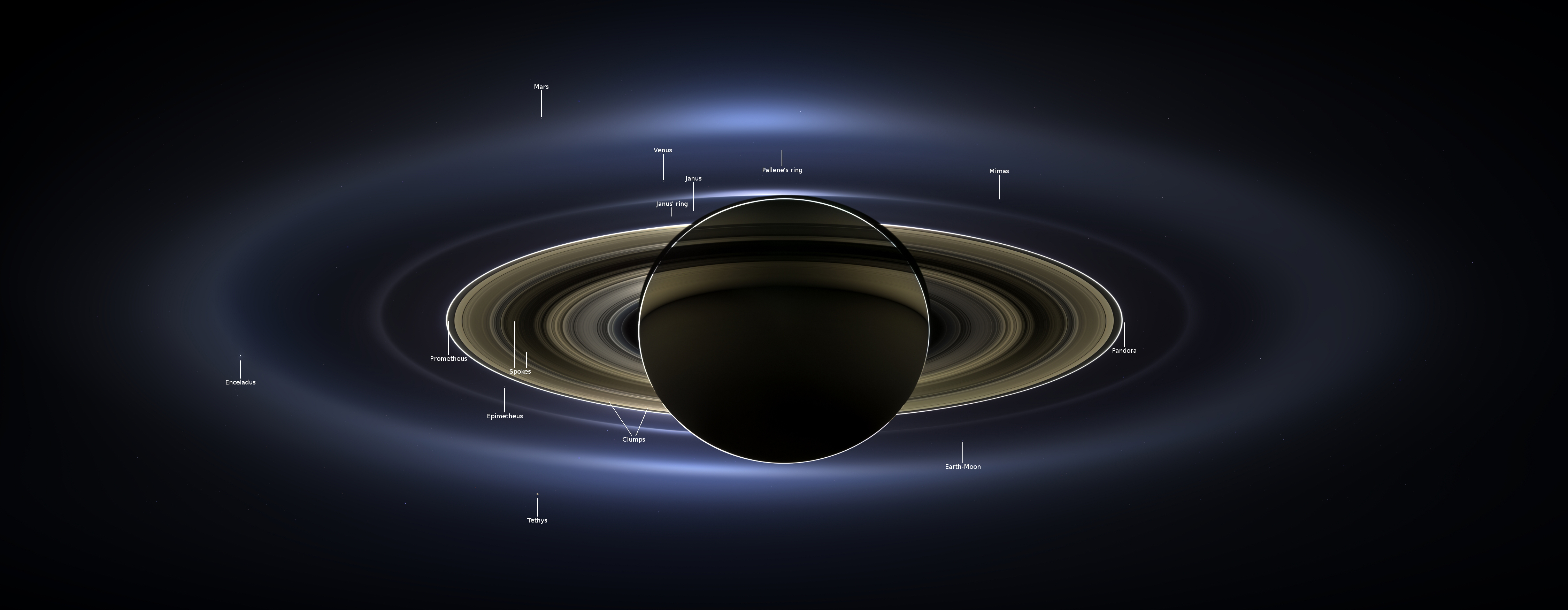
This is Saturn

A real, true-color, photograph of Saturn, taken with the sun in the background!
(Click and zoom to read the labels.)

http://photojournal.jpl.nasa.gov/figures/PIA17172_fig3.jpg

Wednesday, May 15, 2013

Update: brushing my teeth

What? You aren't interested? If it was Chris Hadfield would you be interested?

Chris Hadfield, the first Canadian, lead a mission in the space station, recorded a series of fun videos showing what it is like to do everyday activities in space. He was up for nearly six months, re-entering on May 13.
The Daily Mail Collection

Friday, March 1, 2013

Going to Mars Sooner?

NASA plans a manned trip to Mars in the 2030's. A private businessman wants to pull together a trip in 2018. Neither one involves landing, just orbiting.

Safety requirements in the private world are a lot lower than for NASA.
I provide the article from three sources. Compare the comments.

It is also possible that they will be visiting a much-changed Mars. An extinction-sized comet will  make a close approach to Mars in October 2014. It probably won't hit.

Saturday, March 31, 2012

Looking for a Backup Earth

There has been ever more exciting news of late in looking for a a hospitable, earth-like planet. Thanks to a new orbiting telescope, the news is coming faster.

Most of the best looking planets are bigger and closer to their sun that earth. that is bad news because they will probably be too hot. If it is true that earth-like planets are normally too close to a sun, maybe we should be looking near a cooler red dwarf star to find a habitable planet.
Of course, the very idea does bring this to mind.

Plus, recent progress in how we might get there.

Tuesday, November 15, 2011

Space Tourism

Have you ever wanted to go to space...just so you could look down at earth? Did you imagine it would look quite like this? You're welcome.