Showing posts with label research. Show all posts

Wednesday, January 6, 2021

Marshmallow is Not Soft

Buckets of ink have been spent on the “marshmallow study”. Walter Mischel started the test in the 1960s; finished it in the 1980s and people have been buzzing about it ever since.

The most famous version goes like this. A 4-5 yr-old child is placed in a room with a marshmallow. She is told that she is welcome to eat it now, but if she waits until the adult comes back, she will get two marshmallows. The wait was usually 15 minutes, all alone, in a bare room with a table, two chairs and a plate with a marshmallow. (You will find no shortage of (very cute) videos on this study.)

  • The result: decades later, the kids who resisted were dramatically more successful.
  • The moral: self-control is they key to success.

The study’s fame grew until it is now one the ten best-known stories in psychology, maybe the best. Then, in 2018, Watts published a study claiming Mischel’s conclusion was too simple.

Popular press articles exploded: the marshmallow study is wrong! Debunked! There were lots of takes. One says that it’s really about education: kids from poor families have less willpower. Another says it is about trust in adults: kids from un-trustworthy parents didn’t believe they were ever going to see that second marshmallow. Well, Watts never really thought his study “dubunked” the original, just that it told a more nuanced story.

Well, now a study from New Zealand, originating back in 1972, says...self-control is an excellent predictor of future success. We’re sorry, Walter Mischel.

Saturday, February 10, 2018

SpaceX Launches to Mars

The Falcon Heavy rocket from SpaceX launched on Tuesday. That means that a private company is now the organization in the world most capable of taking large payloads into space; not NASA, not the Russians, European Space Agency, China, Japan nor India: SpaceX.

If the drama was hard to appreciate, consider this for context:

(2nd source for 2nd video: How Not to Land an Orbital Rocket Booster)
A guide to the first video:

Dinosaurs: Dead Again

You've heard that an asteroid killed the dinosaurs. 65 M years ago an asteroid hit Mexico's Yucatan peninsula, covered the earth in a layer of dust, including rare iridium, destroyed the plant life, then herbivores, then carnivores.

You may not have heard that it was the volcanoes. Starting 70 M years ago, near Mumbai in India, a collection of volcanoes called the Deccan Traps spewed sulphur and ash, including iridium, acidifying the oceans and blocking out the sun...etc. But could you have sworn that it mightn't be both?

Wednesday, April 19, 2017

Something From Nothing

One of the weirder ideas of Quantum mechanics is that empty space is not empty at all. No matter how empty you make a space, pairs of particles and and anti-particles will spontaneously come into being move around for a while, then touch each other and disappear.

Apparently physics equations predict that this could happen. We just haven't had any evidence for it...and no idea how we could possibly get evidence. A few decades ago someone suggested that if it happened close enough to a black hole one half of that particle pair could be sucked into the black hole while the other half moved away and became permanent new matter in the universe.


This year, a team from the European Southern Observatory's Very Large Telescope found visual evidence via a phenomenon called vacuum birefringence.

Synthetic Blood


Scientists in England have isolated stem cells and persuaded them to produce red blood cells. The first goal is to get them to make complicated and rare blood types.

Saturday, March 25, 2017

Cavendish


In 1797, Henry Cavendish performed one of the ten most clever science experiments in history by "weighing the earth".

Last month, John Walker recreated it in his basement.

A Winter Jacket

...in winter, a spring jacket in spring.

Monday, April 18, 2016

Slow Progress Expected for Zika

http://www.sciencealert.com/this-is-why-it-s-going-to-be-so-hard-to-create
Above is an excerpt from an infographic for a Zika virus vaccine. It politely hints at the problem.
  1. Zika most strongly affects pregnant women and their newborns.
  2. Any tragedies, whether caused by the vaccine, unrelated to the vaccine or even mitigated by the vaccine will be blamed on the vaccine. There will be lawsuits and the damages will be astronomical.
  3. Revenue will not be astronomical. 
 (July'16) I'm not sure I like where this is going.

Saturday, February 13, 2016

Gravity Waves

http://www.space.com/31922-gravitational-waves-detection-what-it-means.html

The news says gravity waves have been discovered. The headlines say "Einstein proven right" though really, the physics world was not all that apprehensive. The excitement is that we now have a new way to look at the world.


Space.com has a good news release with a video on the implications. Ricochet explains the experiment for an adult layman audience. This Verge video has the background, like how Einstein's concept of gravity is like bending space instead of Newton's idea of a force.

Friday, September 4, 2015

Poison-injecting robot submarines

http://spectrum.ieee.org/automaton/robotics/industrial-robots/poison-robot-submarine

Queensland University of Technology has developed an autonomous, poison-injecting robot submarine to kill sea stars and save coral reefs.

The 21st century is upon us and autonomous assassination robots are here.

Thursday, September 3, 2015

Why We Fall for Bogus Research


Take it away Megan. I can't improve on this:
...on Thursday, Science published the results of a project that aimed to replicate 100 famous studies -- and found that only about one-third of them held up. The others showed weaker effects, or failed to find the effect at all.
This is, to put it mildly, a problem. But it is not necessarily the problem that many people seem to assume...
My favorite line:
Journalists who find themselves tempted to write "studies show that people ..." should try replacing that phrase with "studies show that small groups of affluent psychology majors ..."
https://houseofsage.wordpress.com/2014/07/22/you-are-not-so-smart-summarized-part-1/

Wednesday, July 8, 2015

Ground-Breaking Study that Should Change Your Life


http://www.prevention.com/weight-loss/chocolate-weight-loss
An important study has been published
This spring, Dr. Johannes Bohannon and a team of German scientists discovered that people on low-carbohydrate diets could lose weight faster if they used one weird trick: Eat a bar of chocolate every day.
Newsrooms around the world responded eagerly to Bohannon's findings.
"Excellent News: Chocolate Can Help You Lose Weight!" Huffington Post India declared in a report...Even Europe's highest-circulation newspaper, Bild, got in on the action, publishing a report titled "Slim by Chocolate!"
Journalists and readers looked past the too-good-to-be-true nature of the findings and devoured the story wholesale.
But Bohannon's research was a hoax.
The health study was deliberately faked to test the hypothesis that scientists and reporters rarely detect junk science. No one caught on to this ruse.
No, not the one about the chocolate, the study about the quality of science reporting in our news. Bottom line: you need to learn science, method and critical reasoning because your betters aren't going to do it for you.

Wednesday, July 1, 2015

Science with Tom

Every week, some article he read in a newspaper...rapped. I believe this guy gives off my level of cool.
(Aug'15) Plus Inside Out and My Charon-a

Saturday, January 3, 2015

Survivor Bias

http://youarenotsosmart.com/the-book/
Survivorship bias in a nutshell: If you look at a profession and think: "Wow, that is full of the most skillful, smart, dynamic and interesting people I've ever seen!", should you join that profession or avoid it? David McRaney says, "not so fast." The same thinking applies to aspiring actresses, WWII bombers and businesses.

Before you emulate the history of a famous company, Kahneman says, you should imagine going back in time when that company was just getting by and ask yourself if the outcome of its decisions were in any way predictable. If not, you are probably seeing patterns in hindsight where there was only chaos in the moment.

BTW, this is just one post. McRaney's blog (You Are Not So Smart) is full of long, interesting, thoughtful posts on how people think. He loves the counter-intuitive.

Tuesday, December 30, 2014

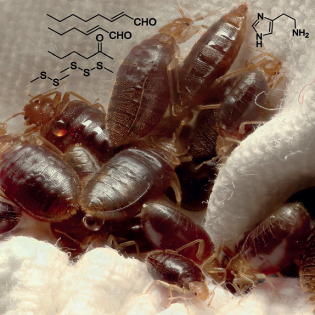
Don't Let the Bedbugs Bite

http://www.wired.com/2014/12/building-a-better-bed-bug-trap/
Our little corner of BC has been okay. But I am told North America is again plagued with bedbugs. Ironically, the worst places are often the most expensive addresses: New York, San Francisco and even Toronto are large cosmopolitan cities with strong environmental sensibilities. They attract people from all over the world, some of whom carry bedbugs in their luggage and they abhor the idea of effective pesticides (like DDT).
Those times may be over. Researchers at SFU may have found the magic formula that will attract bedbugs and thus allow them to be trapped. Their weakness is that they like to cluster together.

Wednesday, September 12, 2012

Scientist with the Greatest Legacy?

The greatest impact on the world of science would have to go to Newton, possibly Bacon or Aristotle. The greatest benefit to mankind from scientific work? I guess that would be Norman Borlaug.

Who?

Borlaug was a farmer and a researcher into farming practices. His main idea was to adapt the best practices of the western farmer to the third world: first Mexico, then Pakistan and India. His most famous work was to breed a "semi-dwarf" wheat that could be grown strong and full without growing too tall, then falling over and rotting.

In doing so, he allowed millions of people to live who would have starved to death, probably hundreds of millions. He may have saved more lives than were taken by Mao, Stalin, Hitler and Pol Pot, combined. In the early 70's, the smart set had agreed that mass starvation was a fact of life that could only get worse. Intellectual discussions were how to manage the suffering.

Even as they published, Borlaug had already proven the technology and was implementing the green revolution.

Norman Borlaug passed away three years ago, today. He was 95.

(Or this video has a little more technical content)

Saturday, August 11, 2012

Teens Who Will be Happy

Nearly every movie or TV show I see aimed at the teen (or worse, pre-teen) audience sends the message that teens are sullen, moody, pouty, self-centered, narcissistic, disrespectful and rude. Worse: they send the message that this is healthy and proper. Any kid who is not narcissistic and disrespectful is a suck, a goody-two-shoes or some sort of deviant.


A new study says otherwise. The most important indicator of how happy and healthy you will be in life is not money, intelligence, grades, image or even popularity. It is connectedness: can you find people nearby to talk to, to help, to enjoy? Do you join clubs? sports are fine and so is the chess club, church youth group or volunteering group. (Even the video games or anime circles work as long as you are talking, not just gaming.) Don't forget mom and dad. It matters.