 We like to think they go together. Here is an example of a doctor for whom they conflict.
“Why wouldn’t I give patients a Percocet prescription? It makes their life easier and my life easier.”
We like to think they go together. Here is an example of a doctor for whom they conflict.“Why wouldn’t I give patients a Percocet prescription? It makes their life easier and my life easier.”
They had stellar resumes, early career success (often in consulting, investment banking, or corporate America), and were driven to succeed. Yet such patently qualified people often proved hopeless in the world of innovation, and I couldn’t quite figure out why.He's very excited about a "new" approach.
[The Future Project]’s strategy centers on a far more fundamental “flip.” They start by helping students define projects or, in their vernacular, dreams. Motivated by an ambitious personal goal, students are motivated to learn the skills, content, and character traits required to complete their self-directed initiatives. The shift in student engagement is stunning. Given a reason to learn, students bring energy to classroom assignments, and commit “free” time (including coming in on snow days!) to improve their writing, public speaking, project management, collaboration, and math skills.I suspect he's more wrong than right. I suspect he either overestimates the motivation and creativity of a classroom of students or underestimates the amount of material good students learn in a year. But as school critics go, he's interesting.
Related: How Men Without Chests predicted the modern university's unsoundnessWe were told it all long ago by Plato. As the king governs by his executive, so reason in man must rule the mere appetites by means of the spirited element: the head rules the belly through the chest ...It is an outrage that [men without chests] should be commonly spoke of as intellectuals. ... Their heads are no bigger than the ordinary. It is the atrophy of the chest beneath that makes them seem so. ...We continue to clamour for those very qualities we are rendering impossible. ...we remove the organ and demand the function. We make men without chests and demand of them virtue and enterprise. We laugh at honour and are shocked to find traitors in our midst. We castrate and bid the geldings be fruitful.

 His method has a pretty big flaw (which he addresses in the details) that you should not miss. As long as you keep this in mind, the results are useful: is it possible that the average petroleum engineer is smarter, harder-working and more motivated than your average library science practitioner? Casselman compares average earnings for university grads to high-school only grads. Is that a similar pool of people?
"Learn better how to argue fairly with yourself."...In case the implications of that original article weren't big enough for you.
Once upon a time, we marketed law schools with a printed brochure or two. That changed with the advent of the new century and the internet. Now marketing is pervasive: web pages, emails, blog posts, and forums.
With increased marketing, some educators began to worry about how we presented ourselves to students. As a sometime social scientist, I was particularly concerned about the way in which some law schools reported median salaries without disclosing the number of graduates supplying that information. A school could report that it had employment information from 99% of its graduates, that 60% were in private practice, and that the median salary for those private practitioners was $120,000. Nowhere did the reader learn that only 45% of the graduates reported salary information.
Fact: Something that is true about a subject and can be tested or proven.Opinion: What someone thinks, feels, or believes.

-Copying homework assignments is wrong.One of them must be wrong.
-Cursing in school is inappropriate behavior.-All men are created equal.
No one speaks more authoritatively about the Socratic method than Plato, and Plato maintained that it was to be reserved for mature men over the age of thirty. "One great precaution," said Plato, "is not to let them [students] taste of arguments while they are young" — the danger being that they would develop a taste for arguments rather than a taste for truth. Young minds, like young puppies, said Plato, would only "pull and tear at arguments."
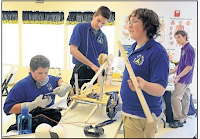
Lessons that result in an end product–a booklet, a catapult, a poem, or a comic strip, for example.
Lessons that are structured as competitive games.
Lessons requiring motor activity.
Lessons requiring boys to assume responsibility for the learning of others.
Lessons that require boys to address open questions or unsolved problems.
Lessons that require a combination of competition and teamwork.
Lessons that focus on independent, personal discovery and realization.
Lessons that introduce drama in the form of novelty or surprise.


